Saturday, May 8, 2010

Egypt

Spring Arrives

For our Spring Break, my good friend Dan and I decided to go to Egypt for eight days. This is an account of our trip.

Day 1

Arrived at Cairo airport early and went directly to see the Great Pyramids of Giza and Sphinx. Next we went to Memphis and the step pyramid. We ate a late lunch at an overpriced touristy restaurant and boarded an overnight train for Aswan.


Looking down at the tourists from Khufu's Pyramid

Me Posing
Our local guide 
In Ruins
Men and their camels
Side Note


I’ll be honest. I dislike Japanese food. There are few things I enjoy from the odd cuisine, and they are mostly overpriced dishes I have to go out to eat. Thus, when it comes to travel I look forward to sating my palate on foreign treats. Egypt did not disappoint.

Two things in particular I was impressed by were the meats and cheeses. I had veal, mutton, beef skewers and spicy chicken, all of excellent quality. In Japan the meat tends to be fatty and small in portions. As for the Egyptian cheeses, I have no idea what their names were, but they were damned good.

Since the food in Egypt was not expensive Dan and I gorged ourselves on large dishes. Most often the places we ate offered a wide variety of food buffet style. There were also times we had fast food. McDonalds was somewhat of a let down. I was hoping they would have a strange line up on their menu, but aside from the McArabia beef sandwich, it was much like the menu at an American McDonalds. To our delight we also found a Carl’s Jr. in Cairo, and it was also like the ones in America. But that didn't bother us in the slightest. We couldn't eat Carl’s in Japan.
While trying the local cuisine, I abstained from eating anything not sold in a clean and sanitary establishment. I learned my lesson last time I traveled in India. No more diarrhea for me.


The Sphinx

The KFC only 150m from Sphinx entrance
Day 2

We arrived late in Aswan. We checked in to our cruise ship. A guide picked us up afterwards and drove us to see the Unfinished Obselisk. After that we went to the Aswan Dam and finally the Philae Temple.


Above the Aswan Dam
Our guide on the boat ride to the temple

Columns added by the greeks
Inside the temple
Relief work
Philae Temple
Side Note
Tourism is big business in Egypt. From across the globe, Europeans, Asian, and Americans come with their big hats and sunglasses to see the magnificent wonders of an ancient time. While sightseeing they shell out their cash and typically leave hundreds of dollars poorer than when they arrived. The money adds up and provides a huge boost to the economy. To make sure there are no problems with the system, Egypt has what are called the Tourism Police. These men, dressed in black uniforms and berets, are in all tourist areas. They carry guns, Typically an AK-47 strapped over the shoulder. If things get ugly they might use their firearms, but only if the threat too has a gun. That’s the law. The police fight guns with guns, knives with knives, and fists with fists.
The big worry of course is an act of terrorism. The last time it happened was in 1997 near Luxor at Deir Al-Bahri. A group of Islamic extremists opposed to the government opened fire on tourists killing 58. The entire tourist industry took a slide as a result, and things would not return to normal for four years. But that was before. As for the Egypt of today I got the impression it is very safe.

Tourist Police man
Day 3

We woke up very early to go to Abu Simbel driving through the desert to reach the site. When we returned to Aswan we boarded our cruise ship and sailed north stopping off once to see Kom Ombo Temple.


The Sahara
Bus ride to Abu Simbel
20m high statues of Ramses II

The tourists flocking in

Waiting to get into the temple

Over the Aswan Dam on the way back

The Nile river
On the cruise ship
Passing under a bridge
Nile at sunset

Kom Ombu Temple
Relief work
Side Note

Guides are a dime a dozen in Egypt it seems, even if they need to study for four years to become licensed. Many specialize in English tours, but I heard many speaking Spanish, French, German, Japanese, Korean and Chinese. To their credit few Egyptians ever travel outside the Middle East, so they pick up their language skills locally.

Since Dan and I dealt with six different guides we got an idea of what makes a good one and bad one. A good guide makes the tour interesting, breaking up the monotonous ramblings of Egyptian antiquity for the sake of adding in a few fun stories. These could be personal accounts or even silly jokes.
A good guide also moves at the tourist’s pace, allowing them to see what they want for as long as they want.

A bad guide on the other hand rushes through a site and wont give the tourist time to take pictures. They say they will give free time at the end of the tour for the tourists to look around on their own, but it is just an excuse for them to wait in a shaded area while the tourist must double back through the site to get the pictures they want.

Next, a bad guide does not have a proper command of the language. This can become annoying since the guides tend to talk at length about thins the tourists are unfamiliar with.

Lastly, a bad guide shows their boredom. Sure they have given the tour of Karnak Temple 100 times before, but the tourist is there for the first time and paying good money for their service. The guide should be positive and play off the tourist group to make each experience as unique as possible.

Day 4

The cruise ship stopped again in Edfu. We got off and toured the temple. Then we continued on our way to Luxor spending most of the day on the cruise ship. We walked around Luxor and booked a side trip on a hot air balloon.

Riding to Edfu Temple
Still some paint on the walls
Light permeates the chamber
Entrance to Edfu Temple
Back to the boat
Along the Nile

Taking in the sights
A shot from the boat

Kids playing in Luxor

Side Note

The river Nile is the longest in the world. It spans half the African continent from its two confluences in Ethiopia and Kenya up to the Mediterranean. In 1971 the Egyptian government completed the Aswan Dam which finally put end to sometimes erratic floods and provided a reliable source of hydroelectric power.
Dan and I took a Nile cruise northbound from Aswan to Luxor. Along the way there was little to see. The Nile has a strip of greenery having its banks covered in palm trees and fields, but beyond that there is only sand. Occasionally, a town will pass by with a few houses and buildings.

In Luxor, Dan and I were determined to swim in the Nile. We asked our local guide where we could go, but she only laughed at us thinking we were joking. “No one swims in the Nile,” she said. Undeterred we set out to find a way.
The west bank of the Nile--the side we were on--was taken up mostly by hotels, boat docks and a commercial port. To swim we knew we would have to cross to the east bank. We paid a man 5 Egyptian Pounds to ferry us across in his tourist boat. The east side was completely rural. Fields, cows, donkeys, camels and farmers made up the landscape. We paralleled the shore looking for a spot until we came to a group of boys playing soccer. They were barefoot, sun burnt and riddled with mosquito bites. One even had the flower like mark of a bad case of ringworm right on his chest.

Dan and I played soccer with the boys. When we tired we removed our shirts and went wading in to the river. A thick layer of black mush covered the river bed and loads of reeds were poking up everywhere. I went in up to my neck, posed for a few pictures and splashed water around like an idiot. It wasn’t much, but I swam in the river Nile. How many people can say they've done that?


Me in the Nile (courtesy of Dan)


Day 5

We got up early to take a hot air balloon ride over the Valley of the Kings. Then we had breakfast and our guide met us and showed us Karnak Temple and Luxor Temple. Dan and I went back to the hotel and then went to swim in the Nile river. That night we met up with the guide for dinner. She brought a friend and we talked.


Readying the hot air balloon


Everyone getting in


Me going up


Other balloons and the sunrise


The Valley of the Kings


Temple ruins below


A temple

A house and farm

The Sahara

After landing

Karnak Temple

Column

Obelsik

Kids touring the temple

Relief work overhead

Walls in decay

Hieroglyphics

Ram sphinxes lining the entrance

Luxor Temple

Our Luxor Guide explaining the images to Dan

A narrow corridor

Temple columns

The entrance

A statue of Ramses II


Side Note


Islam to me is a very restricting religion. From what I saw in Egypt it didn’t seem so bad though. Not when compared to other places like Saudia Arabia. Still Egyptian Muslims must pray 5 times a day. They don't eat pork or drink alcohol either. And for the celebration of Ramadan, it’s no food or water during daylight hours for a month.

The religion of course also has a strong influence over the local culture. The women and men when they date never become intimate, at least not until marriage. And the whole reason for dating is to get married, so it’s a very serious matter, and both people involved have the long term in mind.

In Luxor, our guide Shueshu explained this to me. She also seemed to be giving me a vibe. It started when she told me I could be an actor.
“Really?” I said.

“Yes, you have good face,” she said. “And me. What do you think?”
I looked her over. She had deep set hazel eyes, high cheekbones with a round, slightly upward pointing nose. From the first time I saw her, I thought the woman attractive. “I don’t know,” I said. “I can’t see your hair.” Sheushu was wearing a hijab headscarf, and only her face was exposed.

“Here, look.” She pulled out her cellphone and showed me pictures of herself in regular street clothes without the hijab. “Pretty yes?”

“Yeah. You are pretty.” She smiled shly and changed the topic.
Later Shueshu accompanied us to our hotel. She said she would meet us the following morning to take us to the Valley of the Kings, but before she left I asked her what there was to do at night in Luxor. She made a few suggestions. I then asked if she would be willing to accompany us.

And so it was that we met at 8pm in front of the McDonalds next to Luxor Temple.
Shueshu broght a friend named Nagla, a girl who also worked as a guide. Since Dan and I had no grasp of the local scene we let the girls take us out to a restaurant.

We ordered and ate beef skewers. While Dan and I were busy stuffing our faces, the two girls whispered to one another in Egyptian, constantly giggling. Though they were both 25, it was like being seated with a pair of 15 year olds who had never been out with guys before.

So we got to discussing dating. The girls both said they never dated before nor even kissed or danced with a man who was not family. Shueshu said a man had once shown interest in her, but her mother dissaproved of him and any relationship, so nothing came of it.

"I didn't like him anyhow," Shueshu said. "He was a officer. He try to act too strong. Too much like policeman, even when not working."


Shueshu said her mother would like me though. She wanted to take Dan and I over to her house for lunch the next day so everyone could meet. I said sure. But it never happened. After she showed us around the Valley of the Kings the next morning she had to rush away to meet another tour group. What a shame. It would have been interesting to see the inside of an Egyptian home.

Day 6


Went to see the Valley of the Kings on foot, Deir Al-Bahri and the Valley of the Queens. We next killed time around Luxor temple and met a group of Nubians from Aswan. Around 10pm we caught our overnight train back to Cairo.


Relief work at Hatshepsut temple


The temple


Posing with guards


Hatshepsut Temple in Deir el Bahari


Shops on the way out


Shopping street in Luxor


Luxor Temple at night


At the train station


Side Note

The Nubian people are an ethnic race that historically lived in the areas that is currently the southern part of Egypt and northern Sudan. For centuries they warred with the ancient Egyptians, ultimately losing a great deal of their territory to the Kingdom of Egypt. But the Nubians maintained their culture and even built pyramids of their own and though their creations never equaled those of the Egyptians in scope and scale they were more prolific in number.

In modern times when the Aswan Dam was built the area to the south of the dam was flooded creating Lake Nasser, the second largest man made lake in the world. As a result, the Nubians who lived along the Nile River were forced to relocate. Many moved to cities like Aswan where they had difficulty finding work and were looked down upon by ethnic Egyptians.

Dan and I met a group of Nubians in Luxor who were visiting the city on a field trip to see the temples. They were junior high school students and very friendly. We had an excellent time chatting with them. They asked us all manner of silly questions and posed with us in pictures. I even picked a few of them up and spun them around WWE style. I don't know what it is with me but I have a knack for getting along with kids. I guess I’m just like one at heart.


Me with the Nubian students


Day 7

After arriving in Cairo we checked in to our rather nice four star hotel. Then our guide took us to Old Cairo. We toured an old Christian church and a Jewish Synagogue. Then we went to the Muhammed Ali mosque. For lunch we ate at Carls Jr. Dan and I were both surprised to find one in Egypt. The burgers were good. Lastly we checked out the Cairo Egyptian Museum.


Ruins in Old Cairo


Painting from the time of Christianity in Egypt


A Greek Church


Back alley


A dome outside the Muhammed Ali Mosque


A chandelier inside the mosque


From the outside


Side Note

Ancient Egyptian history is obscenely long and covers over 4,000 years of human civilization, numerous religions, languages and foreign occupants. Somehow they managed to cram 150,000 artifacts representing said history in to one building, the Cairo Egyptian Museum.

Our knowledgeable guide Mona led us through the main corridors explaining random pieces. The highlight of the tour came when we visited the part containing what was found in Tutankhamen’s tomb. There was ancient jewelry, furniture, pots, weapons, papyrus scrolls and statues. However, everything paled in comparison to the golden sarcophagus and mask of Tutankhamen. Both were of an incalculable value, culturally and monetarily. Other highlights we saw included mummified animals, large alabaster sphinxes, carved tablets and exceptional papyrus artwork.

Jokingly I told Mona I wanted to take a piece home as a soveigner. When I asked her why nothing had a price tag she gawked, thinking I was serious. I then asked her how much the statue in front of us was.
“It’s not for sale,” she said.

“Sure it is. Anything has a price. And I can probably bargain with the museum and get it for 200 Egyptian Pounds.”

“You are kidding yes?”

“Of course I am.”

A wave of relief spread across her face.

After visiting the museum I would place it third on my ranking of super worldly museums beneath the National Palace Museum in Taiwan and the Louvre in Paris.

Day 8

We woke up early had a nice breakfast and caught our flight home.

Side Note


Over the winter holidays I went to India for two weeks. Curiously, many Indians mistook me for a local. I never before thought I looked Indian but I left the country thinking otherwise.

In Egypt it was much the same. Some locals looked at me and asked me if I was Egyptian. One of my guides joked that if I could master a few lines of Egyptian I could get in to all the sites at the dirt cheap Egyptian price. I tried to take him up on the suggestion, but he thought better of it and refused saying it would be dishonest. Too bad. The Entrance fees were high—ten to twenty dollars a sight. And we visited over a dozen of them.

By the end of the trip I was thinking I should have got in to acting. I could have been a versatile actor, cast in a large variety of ethnic roles. Kind of like Egyptian actor Omar Sharif was. People tell me I have a strong resemblance of him too. I don't know though. You tell me.
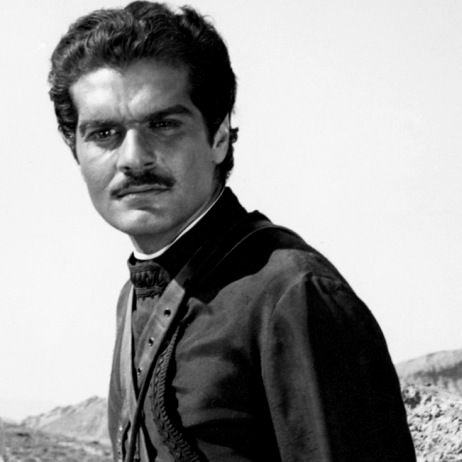


The Man, the Myth, the Legend--Mr. Sharif
In Conclusion


Egypt is a great place to visit. It has no lack of things to see. There are plenty of unique ruins and antiquities not found elsewhere in the world. That being the case, I really do wish I had more time to explore the country. We did a tour package so Dan and I were constantly rushed from one place to another to keep pace with our itinerary. But it was completely worth it. I highly recommend visiting Egypt for anyone who has yet to go there.

Anyhow, I’ve had enough of playing tourist on the fly. Next time I travel I will take more time to see things. I plan to go to the Philippines in summer and I know people there. So it should be a good trip. I can hardly wait. I really do think to much about traveling. But if you have a passion in life, why deny it?


Dan and I. Travelers extraordinaire

Saturday, May 1, 2010

Grandfather

There are few men whom I have admired, and I mean that on a personal level. Sure I have looked up to certain writers and historical figures, but of the people I have met and known, my grandfather is perhaps the only man I have greatly respected. It pains me to now write that he passed away at the age of 99.

Dad said his time had come. I understand this. I knew it from when I last saw him in New Mexico almost a year ago. He was old, frail and tired. He could hardly stay awake for more than 5 hours a day. Communication was difficult.

My aunt Marla, who was looking after him at the time told me many things about him I never knew. Probably because I had never before asked. One story she told me was of how he proposed to Grandma.

Grandfather, when he was a young man, saw her on campus at university and at first sight knew she was the woman for him. He talked to her and over time got to know her. They then become a couple, though in those days the rules of dating were conservative. It was long walks and hand holding at best. But Grandfather did not mind the slow build up to their romance. He enjoyed her company and treasured every moment together.

Finally, he knew he wanted to marry her. To do so he first needed to ask the father for his daughters hand in marriage. He walked to Grandmothers house, to where the road led on to their property. Hesitantly he paused, then walked away, only to return a few minutes later. The second time it was much the same thing. Little did he know Grandma was in her bedroom by the window, watching him. His arrival at her home could mean only one thing.

She was beside herself with joy, but at the same time frightened by the possibility he might have a change of heart and not come all the way to the door. But the third time he appeared he was determined. Their fates were then intertwined and they would spend the next 70 years of their lives together.

For me love has never been so simple and I doubt it ever will be.

It came time to say good by to Grandfather when I was ready to leave his home in Toas. I knelt down beside him. He was on the sofa, breathing lightly, the world around him fading in and out. When I took his hand he came to.

"Ya me voy Abuelo," I told him.

"Ah, si, pues.." he mumbled, still not entirely there.

"Te quiero mucho."

"A ti te quiero tambien."

I began to cry, not wanting to leave him. "Te quiero, te quiero, pero tengo que irme."

"Si. lo se. Y temo que ya nos vemos mas."

His word shattered my heart. He already knew we would never meet again. And I knew it too. But I didn't want to hear him say it, not like that, not when I was unprepared for it.

I loved my Grandfather. In a lot aways I wanted to be like him. He was a teacher. So am I. He travelled the world. So have I. He had a certain gentleness to him. So have I.

Until I draw my final breath, a part of him will live on inside me. And moreover, I will strive to lead my life, to whatever extent I can, in his memory.

Tuesday, February 9, 2010

Story


I was in the middle of teaching a 5th grade classes at one of my elementary schools. To prepare for an activity I had the students cut out some cards. As they were doing that I walked around classrooms looking at all the things displayed on the walls. There were pictures of the students, some of their watercolor drawings, calligraphy work and assignment folders held in to place with the thumbtacks. Inside each of the transparent assignment folders was a packet of papers. One in particular caught my eye. In Japanese it said rejendo obu banana, a transliteration of the English words, legend of banana. There were two bananas drawn beneath the title, and they were crossed together like two yellow swords.

Curious about what the title was referring to I pulled the packet from the file and flipped it open. I read the handwritten words within and quickly concluded that it was a story. It was not very long so I was able to read through it before the students finished their cutting task.

In the story there were two boys, Ichiro and Jiro. They are riding along with an adult on their way to the monkey park. (In Japan they have a few of these monkey parks, or rather, places where Japanese monkeys are kept and people can pay to go in and see them up close.) Jiro expresses his dislike for the monkey park and wants to go home, but Ichiro says, “We have come this far already, it would be a waste to go back now.”

The two boys get in the park and are surprised to find that there are no other people around. Then they feel strange, and the next thing they know they have transformed in to monkeys. Terrified by the other monkeys present they run away in to the forest, but that brings them in to contact with a bear. The two monkey boys flee from the bear and luckily encounter honey with which to distract the animal. Unfortunately, that provokes the wrath of some angry bees which pursue the two until they find a pond to jump in.

When they are free of the bees and dried off Ichiro remembers the legend of banana. It speaks of a great banana which rests upon the biggest hill in the park. Should anyone be changed in to monkey, eating the banana will turn them back in to a human. Ichiro and Jiro head for the biggest hill in sight. It is a tiring climb but they arrive at the top. The banana is on a table ready to be eaten, only there is a problem. The park’s alpha male monkey is guarding the banana. The alpha monkey looks at them and laughs. He is powerful and arrogant but Ichiro and Jiro are not afraid. Both have trained in kendo (a Japanese combative sport that uses bamboo swords). They each grab a tree branch and beat the monkey away.
The prize is left for the taking. They split the banana in two and are about to eat their halves, but Jiro hesitates. He hates bananas. “You must eat it to change back,” Ichiro tells him. Jiro nods and swallows his half. The two become boys again and quickly leave the park. “I’ll never go there again,” Jiro swears. “Me neither,” says Ichiro. The story ends.

As I finished reading, some of the students noticed what I was up to. One girl pointed to a boy across the room and said, “Nakashima wrote the story.” That boy looked up hearing his name.

“Wow, this is an incredible story. Is it true?” I asked jokingly.

The boy said nothing. He looked dumbfounded and embarrassed by the sudden attention. The boy next to him spoke up in his place. “Oh yes. It’s true,” he grinned.

“Really? What a frightening adventure.” I placed the packet back in its folder.

 “That was a lie,” the first girl pointed out thinking I had been fooled. “We each wrote a story, one we made up. I wrote about a snowman, and Minami here wrote about rabbits on the moon.” The girl was right. Each folder contained a story. I furrowed my brow looking at the random titles.

 “You kids sure are imaginative.” Not wanting to fall behind in my lesson I turned away and returned to the chalk board. “Okay everyone, please open your books to page 51.”

 The class went on as usual, but I couldn’t quite focus on the lesson. Somewhere in the back of my head I was still thinking, ‘Legend of Banana’, now there is a story worth sharing. 

Wednesday, January 20, 2010

World Heritage


The United Nations Educational Scientific and Cultural Organization (UNESCO) is an agency that among other things designates places of scientific and cultural significance. Known as UNESCO World Heritage Sites, these areas are broken up in to categories, cultural and natural, or a combination of both. In Japan 14 sites have been designated so far. Italy has the most at 44 followed by Spain and China, with 41 and 35 respectively. America is lower on the list at 20. In total 890 World Heritage Sites exist across the globe as of 2009. All of these designated areas are of “outstanding universal value to humanity,” as the criteria for selection clearly states. Because the UNESCO World Heritage Committee reviews a tentative list of candidate sites on a yearly basis the number continues to grow. For example, in 2000 alone 61 sites gained World Heritage status. By comparison only 13 sites were added last year.

To give you an idea of what places have already qualified, the original list of 12 sites made in 1978 included the Galapagos Islands, Yosemite National Park, the Aachen Cathedral in Germany, and the Historic Center of Krakow, Poland. As more countries ratified UNESCO’s World Cultural and Natural Heritage Treaty the list came to include more prominent locations such as the Pyramids at Giza, the Great Wall of China, and the Taj Mahal. Now practically every renowned monument of antiguity has made the list. Rarely do modern creations qualify though. Some architectural sights like the Sydney Opera House have been selected but Brasilia, Brazil is the only city built in the 20th century to become a chosen site.

As many sites as there are not every famous place has been designated. For years Japanese activist groups have been campaigning to get Mt. Fuji ready for possible selection in 2011. 10 years ago the mountain failed to meet UNESCO’s criteria, much to the bewilderment of the Japanese people. Mt. Fuji is a symbol of the nation, a magnificent conical stratovolcano isolated along the coast. Moreover, it is the tallest point in a long volcanic archipelago, itself marking the precise spot where three tectonic plates from North America, Eurasia and the Philippines meet. So why then was it unworthy? For one there were hundreds of thousands of pounds of illegally dumped trash scattered around the base. Second, it was not considered unique enough of a place.

At the same time many locals worry about the possibility of Mt. Fuji being chosen. There are fears that World Heritage status will draw considerably more tourists and trash to an area that is already overrun during the summer climbing season. Another concern is that part of UNESCO’s criteria states that a site must be properly maintained and protected to keep its status. This puts pressure on the local community and can conflict directly with certain business practices. Two sites have already been delisted for not upholding UNESCO’S standards. The first was the Arabian Onyx Sanctuary in Oman. After its designation in 1984, poaching and continued habitat degradation severely reduced the local Onyx population, thus warranting the decision made by the World Heritage Committee.

There are currently over 30 sites on the UNESCO World Heritage in danger list. Recently, when I was in India I went to an endangered site called Keoladeo National Park. The park gained World Heritage status in 1985 thanks to the varied flora and fauna in the area, particularly the tens of thousands of water foul that winter there following the annual monsoon season. In recent years however poor rainfall has depleted the park’s wetlands causing a reduction in the number of visiting birds. Because the birds and the surface area of wetlands must both be at a certain number to meet the criteria for UNESCO World Heritage status, Keoladeo has been placed on the in danger list. If park officials cannot find a way to improve the water shortage the park will lose it’s status and with it financial support from the UNESCO World Heritage Fund.

Well, since I am on the topic of World Heritage Sites I couldn't help but look back at all the ones I have visited. They are listed below by country. In the case of buildings I may not have entered and toured all of them per say, but I at the very least saw each one from close by. Here they are:

MEXICO
Historic Center of Mexico City
Prehistoric City of Teotihuacan

UNITED STATES
Carlsbad Caverns National Park
Chaco Culture (Chaco Canyon)
Grand Canyon National Park
Independence Hall
Mesa Verde National Park
Redwood National and State Parks
Pueblo de Taos
Yosemite National Park

CHILE
Churches of Chiloe
Historic Quarter of the seaport of Valparaiso

URUGUAY
Historic Quarter of the city of Colonia del Sacramento

FRANCE
Cathedral of Notre Dame
Banks of the Seine

ITALY
Historic Center of Rome
Historic Center of Naples
Royal Palace at Caserta

PORTUGAL
Monastery of Hieronymites and Belem Tower
Historic Center of Porto

SPAIN
Alhambra
Burgos Cathedral
Historic Center of Cordoba
Escorial Monastery
Works of Antoni Gaudi (Parque Guell, La Sagrada Familia)
Old Town of Segovia
Historic City of Santiago de Compostela
Historic City of Toledo
Old Town of Caceres
Cathedral, Alcazar and Archivo de Indias in Sevilla
Old City of Salamanca
Archeological Ensemble of Merida
Route of Santiago de Compostela
Historic walled town of Cuenca
Old Town of Salamanca
University and Historic Precinct of Alcala de Henares
Aranjuez Cultural Landscape

INDIA
Agra Fort
Fatehpur Sikri
Taj Mahal
Chhatrapati Shivaji Terminus
Elephanta Caves
Humayun’s Tomb
Keoladeo National Park
Red Fort
Qutub Minar

JAPAN
Himeji Castle
Historical Village of Shirakawago
Hiroshima Peace Park
Historic Monuments of Ancient Nara
Shrines and Temples of Nikko
Historic Monuments of Ancient Kyoto

THAILAND
Historic City of Ayutthaya

SOUTH KOREA
Changdeokgung Palace Complex
Jongmyo Shrine

That’s 55 in total. 17 of those I visited in Spain. Having lived in Madrid for a year, I had ample time to tour the many regions of the country and could make side trips to Portugal and Italy where I saw 5 more. At the time I didn't even know I was visiting World Heritage sites. It wasn't until I came to Japan that I really learned what they are. Because the Japanese like to travel and have the money to do so, they make a big deal out of seeing them. Anyhow, Europe is definitely the place to check out World Heritage sites. It has the highest concentration out of the 7 continents.

To take things further I want to list what in my opinion are the most impressive sites I have seen. They are ranked in two separate categories, cultural and natural. I have them ranked from one to three with a description of each site.
Cultural Ranking

1. Basilica of St. Peter and the Vatican (Historical Center of Rome)

The Papal Basilica of St. Peter is the most impressive building I have ever seen. It towers 15 stories high and has a panoramic lookout at the very top of the dome from which all of Rome can be seen. Within the building are incredible sculptures, frescos and other artwork, the most famous of which is Michelangelo’s La Pieta. The expansive interior is bigger than any other Christian church and the basilica stands as the de facto center of Catholicism, the number one religion on the planet.

2. Historic City of Ayutthaya

Ayutthaya was the capital of Siam (modern day Thailand). It flourished for 400 years before falling to the Burmese in the 19th century. Several ruins were left and later repaired following the area's designation as a World Heritage site in 1981. The Ayutthaya Historic Park currently contains palaces, temples, pagodas, Buddha statues, rivers and lush vegetation. When I went there three years ago I was very impressed by the architecture and size of the buildings. I only wish I had more than a few hours to tour the park because there was so much to see. Incidentally, Ayutthaya does not get the recognition it deserves because it is overshadowed by nearby Ankor Wat.

3. Alcazar of Segovia (Old Town of Segovia)

Segovia is a town in Spain that was once a Roman outpost in the Iberian expanse of the empire. Later it fell to the moors before becoming part of the Kingdom of Castille. The Christian Kings who ruled over Castille erected a large fortress at the end of Segovia's natural promontory. The fortress later became a castle-palace which towered above the surrounding countryside. It is unique in that it was built in a shape similar to the bow of a ship. Two large towers mark the extremes of the castle giving it a daunting appearance. The Alcazar of Segovia is the most impressive castle I have visited, and stands out as a remarkable architectural feat.

Natural Ranking

1. Grand Canyon National Park

277 miles in length, 18 miles in width, over a mile deep and 17 million years in the making, the Grand Canyon is beyond a doubt the greatest geological wonder of the world. I have been to the canyon six times visiting both the South and North Rims. On one occasion I caught a rainstorm take hold in the skies above the canyon and witnessed lightning strike down in to the vast depths that spread forth from the precipice I was standing upon. It was a thing of absolute beauty.

2. Route of Santiago Compostela

The Route of Santiago is a pilgrimage that has existed for over a thousand years from the time that a sheep herder claimed to find the long lost resting place of the Apostle James. Countless devout Christians from throughout Europe came to visit the spot thus establishing routes across the continent. The final leg of the pilgrimage begins in Roncesvalles in the Pyrennes Mountains and spans the north of Spain before ending in front of the Cathedral of Santiago de Compostela. The cathedral is in Santiago near the northwest tip of the Iberian penninsula. Though most people prefer to go on foot I traveled the entire 800km route by bicycle. Along the way the landscape of northern Spain is majestic. At the start of the route near the French border there are small Basque hamlets nestled in misty valleys. The road continues on extending through hilly territory and vast plains. For the most part the rugged path is for pilgrims travelling on foot. It does parallel a few highways and major cities, but mostly winds through small villages and scenic surroundings. Finally it reaches Galicia where Santiago is. That part of Spain is inundated with heavy rain throughout the year. The forests are thick with underbrush and the skies are dark and unpredictable. It all adds up to a wondrous journey that people have been making for centuries.

3. Carlsbad Caverns National Park

The Carlsbad Caverns are a large network of limestone caves located in southeastern New Mexico. Inside the caves there are stalagmites and stalactites that form very large and interesting formations with names like the Witch’s Finger, Rock of Ages and Bashful Elephant. The largest enclosed space in the cave network is the Big Room which can be entered and self toured. While the Carlsbad Caverns are far from being the largest network of caves in the world there are plenty of well lit chambers accessible to the general public. Moreover, the park features an amphitheater outside a natural opening. In summer hundreds of thousands of Mexican Free-tailed bats come flying out at dusk to feed on insects in the surrounding Guadalupe Desert. Their exodus typically lasts up to three hours and is a unique sight to behold.

Before I finish I would like to make an honorable mention. In my many travels I have seen places that I feel are worthy of UNESCO World Heritage status. Some are on the tentative list for future selections. The current list is comprised of over 14,000 locations from more than 100 countries. Surprisingly, the place that stands out most in my mind is not listed. In other words it will not become a nominated site any time in the near future. The place I am talking about is Monument Valley in southern Colorado. The valley is famous for its massive buttes that rise up over 1,000 feet from a wide wind swept basin. Other geological features in the valley include rock spires, broad mesas and natural arch formations. At ground level the sediment is silt sandstone which contains high levels of iron oxide. Thus, the entire valley and surrounding areas are a vivid orange red. Overhead a deep blue desert sky contrasts sharply with the fire colored earth below. Such scale and beauty, in my opinion, is on par with that of the Grand Canyon.

In Conclusion

I am determined to see 100 UNESCO World Heritage sites by the time I’m 40 years old. Since I started traveling again reaching that number has become an obsession. I plan to go to Egypt in spring where I can visit 5 along the Nile River. Seeing them is the focus of the trip. That would bring me up to 60. Then in summer I could visit China and tally up another 6 or 7. For now though I’m stuck at 55. How about you? How many World Heritage Sites have you seen? Here is the official list for reference:

http://whc.unesco.org/en/list

In front of the Tower of Belem
In the Changdeokgung Palace Complex
Feeding the deers in Nara


Posing in front of the Taj Mahal only it cant be seen because of the fog
Posing with friends in Ayutthaya